
Monterey County Superior Court is the primary trial court for the county, handling civil, criminal, family, probate, and traffic matters. It provides residents with organized procedures for filings, hearings, and access to official court records. Citizens can work directly with clerks, submit legal documents, and check case updates through established systems. The court ensures fairness, accountability, and efficiency in all proceedings. Its role is vital for maintaining legal order in Monterey County, offering a reliable venue where justice is administered consistently and transparently for all participants. As part of the California court system, the Superior Court of Monterey County follows state regulations and judicial standards. It offers services such as reviewing case files, scheduling hearings, and providing access to public calendars and forms. Court staff assist with procedural requirements, document accuracy, and case tracking. Residents benefit from timely updates, structured communication, and clear instructions for legal matters. By combining transparency, professional oversight, and accessible resources, the court builds confidence among community members while supporting the smooth resolution of civil, criminal, and family cases.
The Monterey County Superior Court also provides resources for self-represented parties and the public seeking procedural guidance. Through informational handouts, online forms, and staff assistance, individuals can better understand case steps, deadlines, and filing requirements. The court emphasizes clarity and efficiency, helping citizens manage legal responsibilities without unnecessary delays. Its integration with local law enforcement, legal professionals, and state agencies ensures that cases are handled consistently and fairly. By maintaining these services, the court strengthens community trust and supports smooth, reliable administration of justice across Monterey County.
What is the Monterey County Superior Court?
The Superior Court of Monterey County is the main trial court serving the county. It handles civil, criminal, family, probate, and traffic cases. As a trial court, it has the authority to hear cases, make rulings, and issue binding legal orders under California law. This court is where most legal matters begin, Monterey County Court providing a structured system for resolving disputes and enforcing statutes efficiently. Judges of the Superior Court ensure fair trials and oversee case procedures. The court’s authority covers misdemeanors, felonies, family disputes, and civil claims, making it a central institution for justice in Monterey County.
Legal Authority of the Court
The Superior Court of Monterey County holds broad legal authority under the California Constitution, giving it the power to hear and decide nearly all cases within the county. This includes civil disputes, criminal prosecutions, family law matters, probate issues, and traffic violations. Judges have the responsibility to interpret laws, ensure fair trials, and issue binding orders that affect individuals and organizations. The court also oversees filings, maintains official records, and enforces legal deadlines. Its authority ensures that justice is delivered consistently, supporting both residents and the wider county legal system.
- Hear and decide civil and criminal cases
- Interpret and apply California laws
- Maintain official court records and filings
- Issue legal orders, restraining orders, and rulings on probate matters
Role in California Judicial Branch
The Superior Court is part of the California judicial system, working alongside appellate courts and the state Supreme Court. It ensures that rulings comply with state laws while giving residents access to hearings, case updates, and legal recourse. By combining professional oversight, clear processes, and judicial authority, the Superior Court of Monterey County maintains public trust and ensures justice throughout the county.
Importance for Residents
The Superior Court of Monterey County directly impacts residents’ daily lives by providing a reliable system for resolving disputes and enforcing legal rights. Citizens can access hearings for family matters, civil claims, and criminal cases while ensuring decisions are fair and legally binding. The court also offers official records, forms, and guidance that help residents meet filing requirements and deadlines. By maintaining consistent procedures, professional oversight, and transparent communication, the court strengthens community trust and ensures that justice is administered efficiently, protecting both individual rights and the broader interests of Monterey County.
- Protects legal rights and enforces laws
- Resolves disputes efficiently and fairly
- Provides transparency and reliable procedures
- Offers access to official records and documentation
How to Search Cases in Monterey County Superior Court
Searching for case details in Monterey County is simple when the right steps are followed. The Monterey County Superior Court case search allows people to look up case status, filings, hearing dates, and more. You can search online using official tools or contact the court in person if needed.
Monterey County Case Search
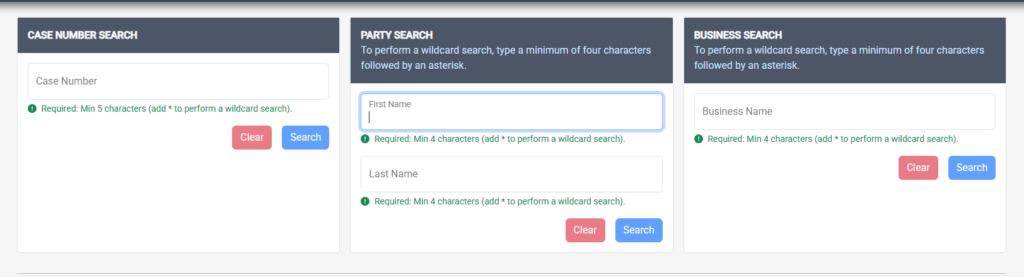
Open your web browser and go to the court’s case search official site: https://www.monterey.courts.ca.gov/online-services/case-search
Choose Search Method
- Search by Case Number (fastest & most accurate)
- Search by Party Name (defendant or plaintiff)
- Other filters when available, like filing date
Search by Case Number
- If you know the case number, enter it exactly as shown on your paperwork.
- Click Search to see case details, scheduled hearings, and case status.
This is the quickest way to get precise results.
Search by Name
- If you don’t have the case number, type the full legal name of a party (defendant or plaintiff).
- Be careful with spelling — small errors can affect results.
- Review all returned matches to find the correct case.
View Case Status and Details
- Case type (civil, criminal, traffic, family, probate)
- List of filings and court actions (register of actions)
- Scheduled future hearings and status updates
- Case number, parties, and court location
Judicial Authority and Legal Powers of the Court
The Monterey County court authority stems from the California Constitution, granting the Superior Court jurisdiction over a wide range of legal matters. It serves as the main trial court in the county, responsible for hearing civil, criminal, family, probate, and traffic cases. Through this authority, the court ensures that disputes are resolved fairly, laws are applied consistently, and community standards are upheld. The court also oversees procedural compliance, maintains official records, and manages case filings to ensure transparency. By providing structured hearings and impartial rulings, it strengthens public trust and upholds the integrity of the local judicial system.
Authority over Civil and Criminal Matters
The Monterey County Superior Court has broad authority over both civil and criminal matters within the county. In civil cases, the court resolves disputes involving contracts, property, personal injury, and family law issues such as divorce and child custody. In criminal matters, it handles misdemeanors, felonies, and traffic violations, ensuring that laws are enforced fairly and consistently. This authority allows judges to review evidence, hear arguments, and issue legally binding decisions, providing a structured process that protects the rights of all parties while maintaining public order and upholding the rule of law.
- Adjudicate civil lawsuits including contracts, property disputes, and personal injury claims
- Handle criminal prosecutions, from misdemeanors to felony cases
- Rule on family law cases, including divorce, child custody, and support
- Manage probate and estate matters, ensuring legal property distribution
Decision-Making Power
Judges in the Superior Court of Monterey County interpret laws, review evidence, and issue binding decisions. Their rulings set precedents for case handling within the county and influence how legal procedures are applied. This decision-making authority ensures that justice is delivered efficiently and equitably. Judges also have the discretion to manage courtroom proceedings, set hearing schedules, and oversee settlement agreements. Their oversight provides consistency in legal outcomes, reinforcing public confidence in the county’s judicial system.
Enforcement of Law
The court’s legal powers extend to enforcing judgments and court orders. By exercising these judicial powers, the Monterey County Superior Court maintains public trust, ensures legal compliance, and reinforces the rule of law across the county. Residents rely on the court’s authority to safeguard rights and uphold justice.
- Restraining orders and protective orders
- Fines, penalties, and restitution in criminal cases
- Court-mandated compliance in civil disputes
Types of Cases Handled by the Court
The Monterey County Superior Court manages a wide range of legal matters, giving residents a reliable system to resolve disputes and enforce the law. From civil and criminal cases to family, probate, and traffic matters, the court provides a structured process for hearings, filings, and decisions. Each case type is handled with clear procedures and professional oversight, ensuring fairness and compliance with California law. By managing diverse case types, the court protects residents’ rights, upholds community standards, and maintains public trust in the judicial system.
Civil Cases
Civil cases involve disputes between individuals or organizations and require careful review and rulings. The court resolves these matters by evaluating evidence, applying legal statutes, and issuing binding decisions. Civil cases are designed to protect the legal rights of all parties involved and ensure fair outcomes while minimizing unnecessary delays in proceedings. These cases can include contract disputes, property disagreements, personal injury claims, and landlord-tenant issues. Judges carefully oversee filings, hearings, and motions to maintain order and clarity, ensuring that resolutions are legally sound and enforceable under California law.
- Contract disagreements
- Property disputes
- Personal injury claims
- Business or landlord-tenant conflicts
Criminal Cases
Criminal cases involve offenses against state laws and public safety. The court examines evidence, conducts trials, and imposes penalties or sentencing as appropriate. These proceedings protect society, uphold the rule of law, and provide defendants with due process. Criminal case management ensures justice is delivered efficiently, fairly, and in accordance with California statutes. The court also handles pre-trial motions, arraignments, and plea agreements, giving defendants and attorneys opportunities to present their cases. Judges may oversee sentencing hearings, restitution orders, and probation terms. By maintaining structured procedures, the court balances public safety with the legal rights of all parties involved, reinforcing trust in the judicial system.
- Misdemeanors and infractions
- Felony charges
- Traffic violations with legal consequences
Family Law Cases
Family law cases focus on domestic and relationship issues. Judges review documentation, hear testimonies, and issue decisions to protect family members’ rights. The court emphasizes fairness and equitable solutions, ensuring legal compliance while supporting the well-being of children and families involved. These cases often involve complex matters such as spousal support, visitation schedules, and modifications to existing custody arrangements. The court also handles restraining orders and domestic violence protections when necessary. By providing clear guidance and enforceable rulings, the Superior Court of Monterey County ensures stability, legal clarity, and the protection of vulnerable family members throughout each proceeding.
- Divorce and legal separation
- Child custody and support
- Adoption and guardianship cases
Probate Cases
Probate cases deal with estates, wills, and trusts, ensuring that property and assets are distributed according to California law. The Monterey County Superior Court oversees all filings, verifies the validity of wills, and resolves disputes among heirs or beneficiaries. Judges review documentation, monitor estate administration, and issue legally binding rulings to prevent conflicts and protect the rights of all parties involved. The court also supervises the appointment of executors or administrators, manages claims against estates, and ensures that taxes and debts are properly handled, maintaining order and fairness in probate matters.
- Asset distribution
- Estate administration
- Will validation
Traffic Cases
Traffic cases involve violations of road and safety regulations. The court adjudicates these matters, applying fines, penalties, or other legal consequences. Proper handling of traffic cases ensures public safety, enforces compliance with California laws, and maintains accountability for all drivers in the county. Judges review evidence such as citations, police reports, and witness statements to determine appropriate outcomes. Traffic cases can range from minor infractions to serious offenses like DUI or reckless driving. By resolving these cases efficiently, the court helps reduce accidents, promote responsible driving, and uphold the rule of law across Monterey County.
- Minor infractions
- Serious traffic offenses
- Vehicle code violations
Court Fees, Charges, and Payment Structure
The Monterey County court fees cover a variety of services related to civil, criminal, family, probate, and traffic cases. These fees help support court operations, including case processing, document management, and courtroom services. Residents and legal professionals are required to pay filing fees, fines, and other charges according to the type of case. The court provides a structured and transparent system so individuals understand their obligations, can plan payments, and ensure that cases proceed smoothly without unnecessary delays.
Fee Categories
The Monterey County Superior Court divides fees into distinct categories depending on the type of case or service requested, ensuring transparency and consistency. These categories help residents, attorneys, and the public understand the costs associated with filing petitions, attending hearings, or obtaining certified copies of documents. Each fee type has specific payment options, and in many cases, financial assistance through fee waivers may be available for eligible applicants. By clearly outlining fee structures, the court supports efficient case processing while making the legal system accessible to all members of the community.
| Fee Category | Typical Amount | What It Covers | Waiver Option |
|---|---|---|---|
| Civil – Unlimited Filing | $435 | Complaint or initial filing in civil cases | Available upon qualifying application |
| Probate Petition – Conservatorship | $425 (investigator) | Probate case filings and investigations | Eligible for waiver |
| Probate – Delivery of Will | $50 | Filing decedent’s will with court | Eligible for waiver |
| Appeal to Court of Appeal | $775 | Notice of appeal filing | Waiver possible |
| Record Search Fee | $15 | Clerk’s time for record search (name search) | Waiver possible |
| Copy Fee | $0.50/page | Copies of court documents | N/A |
Payment Methods
The court provides multiple payment options to ensure convenience for all users. Residents can pay in person with cash, cashier’s checks, or money orders, or online using credit/debit cards. Payments must be made according to fee type to avoid delays in case processing. Electronic payments via the court’s online portal offer quick, secure submissions for many filing fees and court charges. Additionally, some payments can be made by mail with proper documentation, and receipts are provided for every transaction. Timely payments prevent case delays and maintain smooth court operations, ensuring legal matters proceed efficiently. Online payment portals also provide tracking and confirmation, allowing users to verify their transactions instantly.
Fee Waivers
Individuals experiencing financial hardship may request a fee waiver. Applications require verified financial information, and judges review each request carefully. Approved waivers can cover partial or full fees, allowing access to the legal system even when cost might otherwise prevent participation. Fee waivers ensure fairness and equal opportunity for all residents in Monterey County to pursue justice. They can be applied to filing fees, court costs, and certain legal charges. Residents must provide documentation of income, expenses, and household size. Once approved, waivers allow cases to proceed without payment delays, promoting timely resolution. Courts may also offer guidance to applicants to help complete forms accurately, ensuring transparency and reducing administrative errors. This process reinforces trust in the judicial system while making legal services accessible to low-income individuals.
Role of Judges in Monterey County Superior Court
The Monterey County court judges serve as the primary judicial officers responsible for administering justice in the county. They oversee trials, hearings, and other legal proceedings across civil, criminal, family, probate, and traffic cases. Judges interpret laws, ensure procedural compliance, and make legally binding decisions that affect the rights of individuals and organizations. Their work strengthens the rule of law in Monterey County, maintaining fairness, impartiality, and public confidence in the judicial system while ensuring that all cases are resolved efficiently and equitably.
Responsibilities of Judges
Monterey County court judges carry a range of responsibilities to maintain court efficiency and uphold justice. They preside over trials and hearings, review motions and evidence, and ensure all legal filings comply with procedural rules. Judges manage courtroom schedules, provide guidance to juries, and facilitate fair resolutions for disputes. They also handle complex decisions in civil, criminal, family, probate, and traffic cases, balancing legal requirements with equitable outcomes. By overseeing case progression and enforcing court orders, judges ensure transparency, maintain public trust, and support the integrity of the judicial system.
- Presiding over trials and hearings in various case types
- Reviewing motions, evidence, and legal filings
- Managing courtroom proceedings and schedules
- Providing instructions and guidance to juries when applicable
- Ensuring parties comply with procedural rules and deadlines
By fulfilling these duties, judges guarantee that court processes remain organized, fair, and transparent, supporting trust in the judicial system and consistent legal outcomes.
Case Handling
Judges in the Superior Court actively manage case progression from filing to final judgment. They examine evidence, listen to testimonies, and apply California law to determine outcomes. In family and civil cases, judges may mediate disputes, approve agreements, or issue orders. In criminal matters, they oversee trials, rule on motions, and impose sentences where appropriate. Proper case handling ensures that each matter receives attention according to its complexity and legal requirements, providing a clear, orderly, and legally sound resolution for all parties involved.
Decision Authority
Judges hold the legal authority to issue binding decisions and enforce court orders. Their rulings determine case outcomes, establish precedents for future matters, and ensure compliance with state laws. Judges can issue fines, restraining orders, custody arrangements, and other directives necessary to resolve disputes. Their decisions have a direct impact on individuals, families, and organizations within Monterey County. By exercising careful judgment, judicial officers maintain fairness, accountability, and the integrity of the legal system across all types of cases.
Locations and Contact Information
The Monterey County Superior Court locations provide accessible points for residents to file cases, attend hearings, or access official court services. The main courthouse is located in Salinas, which handles most civil, criminal, family, and probate cases. Additional branch locations may handle specialized matters such as traffic citations or small claims. Each location is staffed by court clerks and administrative personnel who assist the public in submitting forms, obtaining records, and answering procedural questions.
Main Courthouse Locations
- Salinas Courthouse (Main Courthouse)
Address: 1200 Aguajito Road, Salinas, CA 93901
Phone: (831) 769-8800
Email: courtinfo@monterey.courts.ca.gov - Marina Branch Courthouse
Address: 211 Hillcrest Avenue, Marina, CA 93933
Phone: (831) 238-3180
Email: marina@monterey.courts.ca.gov - Monterey Branch Courthouse
Address: 240 Church Street, Monterey, CA 93940
Phone: (831) 647-7400
Email: monterey@monterey.courts.ca.gov
Frequently Asked Questions
The Monterey County Superior Court FAQs provide essential information for residents, attorneys, and the public seeking guidance on court procedures. These FAQs cover case searches, filing processes, record access, and timelines for different types of legal matters. By offering clear, reliable answers, the court ensures users understand their rights, responsibilities, and available options. This section helps reduce confusion, saves time, and allows residents to plan their court interactions effectively, whether they are filing documents, checking case status, or attending hearings.
How can I find my case in Monterey County Superior Court?
To find a case, users can utilize the official online case search portal using a case number or the name of a party. This provides access to case status, upcoming hearings, and filed documents. For records not available online, visiting the courthouse clerk’s office in person is necessary. Judges and clerks maintain organized records, ensuring accuracy. Using the portal or contacting the clerk’s office allows residents to track legal proceedings efficiently while understanding where and when court actions occur.
What types of cases are handled by this court?
The Monterey County Superior Court manages a broad range of legal matters, including civil, criminal, family, probate, and traffic cases. Civil matters involve disputes like contracts, property, and personal injury. Criminal cases range from misdemeanors to felonies. Family law cases cover divorce, child custody, and adoption. Probate involves wills and estates, and traffic cases address violations of vehicle codes. Handling these cases ensures residents’ rights are protected while maintaining law and order. Judges apply California law consistently across all case types for fairness and clarity.
Can I access court records without visiting the courthouse?
Many court records are accessible through the Monterey County Superior Court’s online portal, including case summaries, filings, and hearing schedules. Online access allows users to check case status, download forms, and stay updated without physically visiting the courthouse. However, confidential or sealed records require an in-person request or formal authorization. Using the portal efficiently can save time, provide accurate information, and help residents comply with deadlines. This hybrid system balances convenience with security for sensitive legal matters.
What is the process to file a case?
Filing a case requires submitting the correct forms, supporting documents, and paying applicable court fees. Residents can file in person at the clerk’s office or, where available, through online filing systems. Once submitted, judges review the documents, issue a case number, and schedule hearings or procedural steps. Proper filing ensures cases proceed smoothly without delays. Court clerks provide guidance for document preparation, fee calculations, and procedural compliance, helping applicants navigate the process efficiently while ensuring all legal requirements are met for timely resolution.
How long does a court case usually take?
The duration of a case varies based on type, complexity, and court schedules. Traffic or small civil cases may resolve within a few weeks or months, while family, criminal, or probate cases can take several months or longer. Delays may occur due to hearings, motions, evidence review, or court backlog. Understanding the estimated timelines helps residents plan appearances, coordinate with attorneys, and track case progression. The court strives to balance efficiency with fairness, ensuring all parties have sufficient time to prepare while maintaining orderly legal proceedings.