
Monterey County Court handles a wide range of legal cases and supports both residents and legal professionals with reliable court services. It operates within the California judiciary, which sets clear rules for fair and timely case handling. The court manages civil, criminal, family, and probate cases in an organized system. It keeps records updated and easy to request through structured processes. Many services are available online, helping users save time and avoid long visits. This approach makes court interactions simple and more efficient for everyday needs.
Monterey County Court offers essential services such as case lookup, court records, and document filing through both online and in-person options. Users can check case status, hearing dates, and updates through digital systems at any time. Filing services allow quick submission of legal documents without delays. Public records remain available for review, including important case details and legal filings. Court clerks provide support for payments, forms, and general questions when needed. This mix of digital tools and direct help keeps the process smooth and user-friendly.

Monterey County Superior Court at a Glance
Monterey County Superior Court serves as the main trial court for the county and handles a wide range of legal cases under the California judiciary system. It manages civil, criminal, family, and probate matters with clear procedures and local authority. Monterey County Superior Court forms a key part of the California judiciary system, acting as the primary court where most cases begin and end. It operates at the county level and follows state laws and judicial rules. The court maintains an organized court system structure, which helps manage cases efficiently across different departments. Each division focuses on a specific case type, making the process more streamlined. This setup allows the court to serve the public with consistent and fair outcomes.
Role in the California Judiciary System
The court plays a central role within California’s three-level court system. It connects local legal matters with statewide judicial oversight and keeps case handling consistent across different regions. Each level has a clear function, which helps users understand where cases start and how appeals move forward.
- Superior Courts – Trial courts at the county level
- Courts of Appeal – Review decisions from lower courts
- California Supreme Court – Highest authority for legal review
As a trial court, Monterey County Superior Court handles evidence, hears witnesses, and makes initial rulings. It follows statewide policies while applying them to local cases. This balance supports both state-level consistency and county-level flexibility.
Types of Cases Handled
This court handles many case types through specialized divisions. Each division follows a defined process, which helps keep case flow steady and reduces confusion for users. Clear categories allow faster case management and better service delivery.
- Criminal Cases: Felonies, misdemeanors, and traffic violations
- Civil Cases: Disputes over contracts, property, or personal injury
- Family Law: Divorce, child custody, and support cases
- Probate Matters: Wills, estates, and guardianships
- Small Claims: Lower-value disputes with simplified procedures
Authority and County Jurisdiction
Monterey County Superior Court holds full county jurisdiction over legal matters within Monterey County. It has the authority to issue judgments, enforce laws, and resolve disputes based on California statutes. Judges in this court can make binding decisions that affect legal rights, property, and responsibilities. The court works closely with local agencies, law enforcement, and legal professionals to carry out its duties effectively.
Monterey County Court Case Lookup & Records Search
Case lookup Monterey County services allow users to search court cases and review Monterey court records through online systems or in-person requests. These tools help users find case details, track updates, and review public records in a structured way.
How to Search for Cases
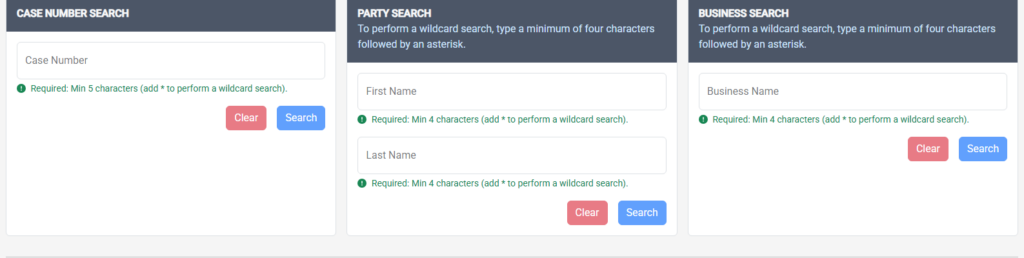
The case lookup Monterey County system supports simple and accurate searches using basic details. Users can enter specific information to narrow results and find the correct case without delays. The system uses filters that match court records stored in official databases.
Steps to User for Case Search
Follow these steps to complete a court docket search:
- Visit the official website:
https://www.monterey.courts.ca.gov - Locate the Case Search / Case Lookup section on the homepage
- Choose the search method based on available details:
- Name Search (party name or business name)
- Case Number Search (exact match for fast results)
- Date Search (filter cases by filing or hearing date)
- Enter the required details in the search fields
- Use correct spelling for better accuracy
- Avoid extra spaces or symbols
- Click the Search button to view results
- Review the case list displayed on screen
- Select the correct case from the results
- Open the case file to view details such as:
- Case status
- Hearing dates
- Case type
- Parties involved
- Check document availability
- Some files are viewable online
- Others may require a clerk request
Online vs Offline Methods
Users can choose between online systems and in-person services based on their needs.
Online Methods
- Use the official website for public records Monterey court
- Search case details anytime
- View basic case information and schedules
Offline Methods
- Visit the court clerk’s office
- Request certified copies of documents
- Get help with detailed or complex searches
Offline methods work well for users who need stamped or verified records.
Types of Records Available
The Monterey court records system includes multiple record types for different legal matters. Each type follows court rules for public viewing and privacy.
Available Record Categories
- Civil Records: Property disputes, contracts, claims
- Criminal Records: Charges, hearings, outcomes
- Family Law Records: Divorce, custody, support
- Probate Records: Estates, wills, guardianships
- Traffic Records: Violations and citations
Types of Cases Handled by Monterey County Court
Criminal court Monterey, civil court Monterey, and family court Monterey divisions handle a wide range of legal matters within the county. Each division focuses on specific case types, which helps keep the court system organized and efficient. The Monterey County Court uses a clear structure to manage different legal issues. Each division follows its own process, which improves case flow and reduces delays. This setup supports both simple and complex cases, giving users a clear path based on their legal needs.
Criminal Cases
Criminal court Monterey handles cases where a person is accused of violating the law. The court evaluates evidence, hears testimony, and ensures fair trials for both the defendant and the public. These cases can range from minor offenses to serious crimes. Court procedures include arraignment, pre-trial hearings, trials, and sentencing. This division works closely with law enforcement and prosecutors to manage cases efficiently.
Common Criminal Case Types
- Felonies: Serious crimes such as robbery, assault, and major theft
- Misdemeanors: Lesser offenses like petty theft or disorderly conduct
- Traffic Violations: DUI, speeding, and other driving-related cases
Civil Cases
The civil court Monterey division resolves disputes between individuals, businesses, or organizations. Civil cases do not involve criminal charges but focus on resolving disagreements and compensating damages. The court ensures that both parties present their evidence and arguments fairly. These cases often require detailed documentation and legal representation. Efficient handling of civil matters helps protect property, financial, and contractual rights.
Common Civil Case Types
- Contract Disputes: Breach of agreements and business conflicts
- Property Issues: Boundary disputes, landlord-tenant conflicts
- Personal Injury Claims: Accidents, medical claims, and damages
Family Law Cases
The family court Monterey division manages cases involving family relationships. These cases often require careful attention to protect children and vulnerable parties. Judges prioritize the best interests of minors while balancing the rights of adults. The division offers mediation and hearings to resolve conflicts. Family cases are often sensitive and involve both legal and emotional considerations.
Family Law Case Types
- Divorce and Separation
- Child Custody and Visitation
- Child and Spousal Support
- Domestic Violence Restraining Orders
Probate & Small Claims
The probate and small claims divisions handle specialized cases. Probate cases focus on estate management, while small claims provide a faster way to resolve low-value disputes. Both divisions follow simplified procedures to ensure efficiency. These divisions often provide guidance to self-represented individuals.
Probate Case Types
- Wills and Estate Distribution
- Guardianships and Conservatorships
Small Claims & Traffic Cases
- Small Claims: Monetary disputes involving lower amounts
- Traffic Cases: Minor violations and citations
Monterey County Court Departments & Administration
Court administration Monterey ensures the smooth functioning of the Monterey County Court and manages all case processing under county jurisdiction California. The system organizes various departments, staff, and judicial divisions to maintain efficiency and transparency. The Monterey County Court operates several departments, each with specific responsibilities. The court clerk’s office plays a central role in maintaining records, handling filings, and assisting the public with case inquiries. Clerks manage document intake, schedule hearings, process fees, and provide certified copies of legal documents. This office is often the first point of contact for individuals seeking guidance or submitting legal forms.
Judicial Divisions
The judicial divisions manage cases according to their type and ensure each matter is handled by experienced judges. Divisions are structured to handle specialized cases efficiently while maintaining consistency and fairness in decisions. Each division follows defined procedures, which help reduce delays and support smooth case flow. Residents and legal professionals rely on these divisions for clear instructions and predictable outcomes. Judges work closely with clerks and support staff to maintain proper scheduling and case management.
Judicial Divisions Include:
- Criminal Division – Manages felony, misdemeanor, and traffic cases
- Civil Division – Oversees disputes, personal injury, and contract matters
- Family Law Division – Handles divorce, custody, support, and domestic violence cases
- Probate & Small Claims Division – Focuses on estate matters and low-value claims
Administrative Roles
Administrative roles ensure the court runs smoothly behind the scenes. Staff coordinate operations, manage case flow, and support both judges and the public. These roles are critical for keeping the court organized and ensuring that deadlines are met efficiently. Administrators oversee daily operations, budgets, and staffing, while support staff assist with records and public inquiries. Case managers track the progress of individual cases to prevent delays.
Administrative Roles Include:
- Court Administrators – Oversee budgets, staffing, and scheduling
- Case Managers – Monitor case timelines and compliance
- Support Staff – Assist with filings, public services, and recordkeeping
Court Services Available in Monterey County
Court services Monterey provide residents and legal professionals with access to filing, hearings, jury management, and self help legal support. These services ensure that the legal services Monterey County offers are accessible, organized, and efficient for all users. The Monterey County Court organizes its services to meet a wide range of needs, from submitting legal documents to participating in jury duty. With online and in-person options, users can access essential services quickly and with minimal confusion. Interactive tools, such as service finder widgets, help residents select the right service for their situation.
Case Filing Services
Case filing services allow users to submit legal documents to the court efficiently. This includes civil, criminal, family, probate, and small claims filings. Both attorneys and self-represented individuals can use the online system or visit the clerk’s office in person. Filing is a critical first step in any case, and accurate submission ensures timely court processing. The court provides guidance and checklists to help users complete forms correctly and avoid delays.
How Filing Works:
- Submit forms through the eFiling portal for fast processing
- Pay required fees online or at the clerk’s office
- Receive confirmation and a case number for tracking
- Request certified copies of documents if needed
Court Hearings & Scheduling
Court hearings and scheduling services manage all case appearances, ensuring timely resolution of legal matters. The court provides clear instructions for attending hearings, submitting evidence, and preparing documents. Proper scheduling helps both the public and attorneys plan ahead and ensures cases move efficiently through the system.
Key Points:
- Hearings scheduled based on case type and urgency
- Notifications sent for dates, times, and courtroom locations
- Flexibility for rescheduling in certain circumstances
Jury Duty Services
Jury duty services handle the selection, notification, and management of jurors. The court ensures that residents understand their responsibilities and have access to instructions and resources. Participating in jury service is a civic duty, and the court provides tools to simplify this process and avoid confusion.
Jury Duty Features:
- Online reporting and confirmation
- Instructions for excusal or deferral requests
- Access to schedules and updates
Self-Help Legal Services
Self help legal services provide support for individuals without attorneys. These services guide users through filing forms, preparing for hearings, and understanding court rules. Access to self-help resources ensures residents can handle legal matters responsibly while complying with court procedures.
Available Assistance:
- Guidance on family law, small claims, and civil matters
- Instructions for filing and completing court forms
- Resources for mediation or alternative dispute resolution
Jury Duty Information in Monterey County
Jury duty Monterey County ensures that residents participate in the legal process as jurors, supporting fair trials and the county’s judicial system. The court provides clear instructions, exemptions, and tools to manage service efficiently.
How Jury Duty Works
When selected, residents receive a jury summons notifying them of their obligation. Jurors are randomly chosen from voter registration and driver license records. The court assigns jurors to specific trials based on availability and case needs. Participation is considered a civic responsibility, and the process is structured to minimize disruption to daily life. Jurors receive guidance on when and where to report, what to bring, and how the trial process works.
Reporting Instructions
The court provides instructions for reporting to jury duty:
- Check your jury summons for reporting dates and location
- Confirm attendance online or by phone using the Jury Status Checker Tool
- Arrive on time and bring required identification
- Follow courtroom procedures and instructions from the jury staff
- Notify the court in advance if any scheduling conflicts arise
Exemptions and Deferrals
Certain individuals may be excused or deferred from jury service based on eligibility criteria. Common exemptions include:
- Age or health-related concerns
- Full-time students or active military service
- Recent jury service within the past year
- Other hardship claims approved by the court
Filing a Case in Monterey County Court
Filing a case Monterey court allows individuals and attorneys to formally begin legal proceedings within the county. The court provides clear guidance on forms, fees, and submission methods to ensure proper processing. Filing a case involves submitting legal documents to the court so that it can officially record and manage the matter. Whether for civil, criminal, family, or probate cases, the process requires following specific steps, providing correct documentation, and paying applicable fees. Understanding the process helps avoid delays and ensures the case is accepted for review.
Step to Process
- Determine the Case Type – Identify whether the case is civil, criminal, family, probate, or small claims.
- Obtain Required Forms – Download official court forms or request them from the clerk’s office.
- Complete Forms Accurately – Fill out all required fields, including names, case details, and signatures.
- Pay Filing Fees – Fees vary depending on case type and can be paid online or at the clerk’s office. Fee waivers may be available for eligible individuals.
- Submit Forms – Use the eFiling system for online submission or deliver documents in person to the clerk’s office.
- Receive Case Number – After submission, the court issues a case number for tracking and future reference.
- Schedule Hearings – The court clerk will provide information about initial hearings or next steps.
Required Documents
- Completed court forms for the specific case type
- Identification and contact information
- Supporting documents (contracts, evidence, affidavits, or financial statements)
- Payment for filing fees or fee waiver application
Filing Fees & Timeline
Below is a general overview of common filing fees and typical timelines in Monterey County Superior Court. Actual fees are set by the court’s official fee schedule and may change. Check the Bail & Fee Schedules page for the most current amounts.
| Case Type | Typical Filing Fee | Timeline to Hearing* |
|---|---|---|
| Civil (Unlimited) | ~$395–$450+ | ~30–60 days |
| Civil (Limited) | ~$225–$300+ | ~30–60 days |
| Family Law | ~$435–$450+ | Depends on case complexity |
| Probate | ~$360–$450+ | ~45–90 days |
| Small Claims | ~$30–$100+ | ~30–70 days |
| Criminal (Initial Filing) | Set by bail/penalty schedule | Immediate arraignment schedule |
Online Services & Digital Access
Online court services Monterey allow residents, attorneys, and businesses to access court functions conveniently through digital platforms. The court offers e-filing, online payments, and virtual hearings to streamline processes and reduce in-person visits. The Monterey County Court has integrated technology to make legal services more accessible. Users can submit documents, pay fees, and participate in hearings from home or office, saving time and increasing efficiency. Digital access ensures that the court can serve more people without compromising accuracy or security.
E-Filing
E-filing allows attorneys and self-represented parties to submit legal documents electronically. This system provides immediate confirmation of receipt and reduces the risk of errors or lost paperwork. E-filing also helps users avoid long waits at the clerk’s office and ensures documents are officially recorded with the court. It is available for most case types, including civil, family, probate, and criminal matters. The platform includes guidance and instructions for first-time users.
- Submit civil, family, probate, and criminal case documents online
- Receive electronic case numbers and filing confirmation
- Track the status of submissions in real time
Online Payments
Online payments allow users to pay filing fees, fines, and other court charges quickly and securely. The system reduces the need for in-person visits and provides instant confirmation for transactions. Users can access a digital history of payments, which is useful for recordkeeping and proof of payment. Online payments are available 24/7, making it easier for residents to comply with court requirements without interrupting daily routines.
- Accepts credit/debit cards and e-checks
- Provides instant payment confirmation
- Keeps a digital record of all transactions
Virtual Hearings
Virtual hearings let parties attend court proceedings remotely via secure video platforms. These hearings are ideal for individuals who face travel challenges or need to participate from a distance. The court provides instructions and technical support to ensure smooth participation. Virtual hearings maintain the same rules and protocols as in-person sessions, allowing jurors, attorneys, and litigants to engage fully in the process.
- Participate in hearings from any location with internet access
- Submit evidence and documents electronically before the hearing
- Receive instructions and links directly from the court
How to Contact Monterey County Court
Monterey court contact info is important for anyone who needs direct assistance with cases, filings, records, jury duty, or general inquiries at the Monterey County Superior Court. The court operates multiple locations throughout the county and provides phone, email, and in person options to support users reliably. The main phone number for the Monterey County Superior Court is (831) 775‑5400, which connects callers to the primary clerk’s office at the Salinas Courthouse. This line can help with general questions about case status, filings, hearings, and court procedures.
Phone Numbers
- Main Court Line: (831) 775‑5400 – Central contact for filings and general inquiries
- Monterey Courthouse: (831) 647‑5800 – Local courtroom and services at Monterey location
- King City & Marina Locations: (831) 883‑5300 – Regional courthouses for local cases and documents
Calling during business hours helps ensure the right department answers your question, whether it’s records, scheduling, or payment info.
For written questions or electronic communication, the court provides an official email address: mediainfo@monterey.courts.ca.gov. This email is suitable for general messages, requests for information, or clarification about court services. Staff typically respond during regular business hours, and email inquiries are a convenient way to get assistance without visiting the courthouse in person. Be sure to include your full name, case number (if applicable), and a clear description of your question to ensure a prompt and accurate response.
Office Hours
Most Monterey County Superior Court offices operate Monday through Friday with standard business hours for public services and clerk assistance. These hours typically run from 8:30 a.m. to 4:30 p.m., allowing ample time for filings, inquiries, and other court-related matters. Some locations may offer limited evening or extended hours for specific services, but it’s recommended to check in advance. Additionally, the court observes all major holidays, during which offices remain closed, and certain services may be available online for added convenience.
- Monday – Friday: 8:00 am – 4:00 pm
- Some locations may have extended hours for specific services or departments such as family law or self‑help centers.
Office Locations
There are several court sites across Monterey County where users can get help with filings, hearings, records, and in‑person services. Each location is equipped to assist with specific types of cases, including civil, criminal, family, and probate matters. Visitors are encouraged to review the services offered at each site to ensure they go to the correct courthouse for their needs.
- Superior Court of California, County of Monterey – Main courthouse at 240 Church St, Salinas, CA 93901. This is the primary location for general court services, criminal cases, and civil matters.
- Juvenile Justice Court – Located at 1422 Natividad Rd, Salinas, CA 93906, this branch handles juvenile delinquency and related matters.
- Superior Court Monterey Division – 1200 Aguajito Rd, Monterey, CA 93940. This branch serves civil, family law, probate, and domestic violence matters.
- Superior Court – 250 Franciscan Way, King City, CA 93930. This smaller courthouse provides local services including traffic and self‑help support on designated days.
- Superior Court Marina Division – 3180 Del Monte Blvd, Marina, CA 93933. This location handles traffic cases, small claims, and other regional matters.
Frequently Asked Questions
Monterey County Court FAQs provide quick answers to common questions about case management, filing, and court procedures. These frequently asked questions help residents, attorneys, and first-time visitors access essential information without delay.
How can I check the status of my case?
To check a case status in Monterey County, use the online Case Lookup Tool. Enter your case number, party name, or filing date to get real-time updates. This tool shows upcoming hearings, filed documents, and case progress. For additional help, the court clerk can assist via phone or email. Using the online tool ensures you get accurate information quickly.
What are the court’s office hours?
Monterey County Superior Court offices are generally open Monday through Friday, 8:00 am – 4:00 pm. Certain divisions like family law or self-help centers may have slightly different schedules. Online services, such as e-filing and case lookup, are accessible 24/7. Visiting during standard hours ensures access to clerks for filing, payments, and inquiries.
How do I file a case in Monterey County?
Filing a case requires identifying the case type, completing the proper forms, paying the required fees, and submitting them to the court. Forms can be downloaded from the Monterey County Superior Court website or obtained in person. Submission can be done via e-filing or at the clerk’s office. Following the correct process ensures the case is officially recorded and processed without delays.
What are the filing fees?
Filing fees vary depending on the type of case. Civil cases usually cost $225–$450, family law and probate cases can range $360–$450, and small claims are $30–$100. Fee waivers may be requested for those who cannot afford the cost. Paying the correct fee is essential to avoid delays or rejection of the filing.
How does jury duty work in Monterey County?
Jurors are randomly selected from voter registration and driver license records. Once summoned, you must confirm your reporting date using the Jury Status Checker Tool. The court provides instructions for attendance, excusal requests, and responsibilities. Jury service is a civic duty, and following the instructions ensures smooth participation.
How can I contact the court for help or questions?
The Monterey County Court can be contacted by phone, email, or visiting a courthouse in person. The main line is (831) 775‑5400, and the official email is mediainfo@monterey.courts.ca.gov. Be ready with your case number or details to get faster assistance. Courthouse locations include Salinas, Monterey, King City, and Marina.