The Monterey County clerk of court manages court records, filings, and official documents for the local court system. This office plays a key role in keeping legal processes organized and properly recorded for both the public and legal professionals. The clerk office Monterey County works under the Superior Court and handles daily administrative tasks that support smooth court operations. These tasks include accepting legal filings, maintaining accurate case records, and helping people request certified documents. Clear recordkeeping helps courts function without delays and supports fair legal proceedings. The office handles civil, criminal, family, and probate case files with care and consistency. It serves as a reliable point of contact for anyone needing court-related services. Many people visit the clerk’s office to file paperwork, check case status, or request official copies. By maintaining detailed and updated records, the clerk helps keep the justice system transparent and efficient for everyone involved in legal matters across Monterey County.
The court clerk services provided in Monterey County cover a wide range of needs for the public and legal system. These services include document filing, case record searches, certified copy requests, and fee processing for court-related actions. People can use these services in person, by mail, or through online systems, depending on availability. The clerk office Monterey County helps reduce confusion by offering clear procedures and structured processes for each service. Staff members assist with general questions and provide direction for filing requirements or case information requests. Accurate documentation supports judges and attorneys in reviewing cases and making informed decisions. Public record availability builds trust and keeps court activities open and traceable. The clerk’s role helps avoid errors that could delay legal proceedings or create confusion in case handling. With organized systems and dependable service, the Monterey County clerk of court supports efficient case management and provides valuable assistance for anyone interacting with the court system.
What Are Monterey County Clerk of Court Services?
Court clerk services in Monterey County handle document processing, records management, and daily court administration tasks. These services keep court operations organized and support accurate handling of legal cases. The court clerk services in Monterey County focus on the administrative side of the court system. Monterey County Court the clerk does not make legal decisions but supports the process by managing all required paperwork and records. This role separates administrative duties from judicial duties, where judges review cases and issue rulings. The clerk office works behind the scenes to keep every document filed correctly and every record updated. Strong records management helps prevent errors and keeps case information easy to track. This system allows courts to function in a structured and reliable way, which supports fair legal outcomes.
Core Functions of Court Clerk Services
The clerk office handles several important responsibilities that support court operations every day. Each task requires attention to detail and strict accuracy. The office is responsible for managing a high volume of legal documents that must be properly filed, indexed, and stored for easy retrieval. Staff members ensure that all case-related paperwork is processed in a timely manner to avoid delays in court proceedings. They also verify that documents meet legal formatting and filing requirements before acceptance. Maintaining organized and secure records is essential to preserve the integrity of the judicial system. In addition, the clerk’s office plays a key role in assisting the public by providing access to court records and information. Individuals often rely on the office for copies of legal documents, case status updates, and guidance on filing procedures. Staff must communicate clearly and professionally while handling sensitive information with confidentiality. Fee collection is another critical duty, requiring accurate accounting and proper documentation of all transactions. The office also schedules hearings and coordinates with judges, attorneys, and other court personnel.
- Filing intake: Receiving and reviewing legal documents before entering them into the system
- Document processing: Organizing and recording filings for different case types
- Case record maintenance: Updating and storing files for ongoing and closed cases
- Fee collection: Managing payments for filings, copies, and court services
- Public interaction: Assisting people with case searches, document requests, and general questions
Administrative Role vs Judicial Role
The administrative role within a court system is primarily focused on managing the operational and procedural aspects that keep the court functioning efficiently. Court clerks and administrative staff are responsible for handling documentation, organizing case files, maintaining records, and ensuring that all filings are processed accurately and in a timely manner. They act as the backbone of the court’s daily workflow, ensuring that judges and legal professionals have access to properly organized information when needed. This role requires strong attention to detail, knowledge of legal procedures, and the ability to manage large volumes of paperwork without errors. Administrative professionals also play a critical role in interacting with the public. They assist individuals with filing documents, provide guidance on court procedures, and ensure that all required forms are completed correctly. While they cannot offer legal advice, they help streamline communication between the court and the public. Their work ensures transparency, accessibility, and efficiency within the justice system, making legal processes easier to navigate for everyone involved.
| Role Type | Responsibilities |
|---|---|
| Administrative | Filing documents, managing records, handling fees |
| Judicial | Hearing cases, reviewing evidence, issuing decisions |
Why Accuracy and Reliability Matter
Accuracy in document processing and records management is critical in legal matters. Even a small mistake can affect case timelines or legal outcomes. The Monterey County Clerk of Court maintains strict procedures to keep records complete and up to date. This includes careful intake of filings, where each document is reviewed for correctness, completeness, and proper formatting before being officially accepted into the system. Staff members follow standardized protocols to ensure that case information is entered accurately into digital and physical record systems, reducing the risk of discrepancies or missing data. In addition to initial filing, ongoing records management plays a vital role in maintaining legal integrity. Court records must be continuously updated as cases progress, including motions, rulings, hearings, and final judgments. Each update is logged systematically to preserve a clear and traceable history of the case. This level of organization ensures that attorneys, judges, and the public can access reliable information when needed.
- Clear case tracking
- Proper legal documentation
- Smooth court operations
- Public trust in the system
Current Monterey County Clerk of Court
The current Monterey County clerk of court is Rebecca Connolly, who serves as both the Executive Officer and Clerk of the Court. She oversees court administration and manages clerk operations across the county’s judicial system. The Monterey County clerk of court is led by Rebecca Connolly, who holds dual responsibilities as the court executive officer and clerk. In this leadership role, she directs overall court administration while also supervising the daily functions of the clerk’s office. Her position connects administrative management with operational execution, helping maintain consistency across all court services. By coordinating staff, resources, and procedures, she supports smooth case handling and reliable public service. Her leadership plays a central role in ensuring that court processes remain organized, timely, and aligned with established standards within the judicial system.
Role of the Court Executive Officer & Clerk
In her combined role, the clerk is responsible for both high-level management and day-to-day operations of the court system. She oversees administrative functions, ensures accurate record-keeping, and maintains the integrity of official documents. In addition, she coordinates with judges, attorneys, and court staff to ensure smooth case processing and scheduling. Her duties also include implementing court policies, managing workflows, and supporting efficient and transparent judicial operations.
- Overseeing court administration: Managing departments, staff, and workflow across the court
- Managing clerk operations: Supervising filing processes, recordkeeping, and service delivery
- Ensuring policy compliance: Aligning procedures with California judicial rules and regulations
- Coordinating court services: Supporting judges, attorneys, and the public with administrative needs
Leadership Impact on Court Services
A strong leadership at the clerk level influences how efficiently the court operates and how the public experiences its services. The Monterey County clerk of court leadership focuses on improving systems and maintaining high standards in service delivery. It ensures that administrative processes run smoothly and that records are managed with accuracy and transparency. Court Calendar Strong coordination between departments helps reduce delays and improves overall case handling. Continuous evaluation of procedures allows for timely updates and better resource allocation. Emphasis on accountability and responsiveness builds trust with the public and supports a more accessible and reliable court system.
- Operational efficiency: Streamlined workflows reduce delays in filings and case processing
- Modernization efforts: Adoption of digital tools and updated systems for record management
- Public service quality: Clear procedures and accessible services for users
- Staff coordination: Organized teams that handle different areas of court administration
Role in Transparency and Public Trust
Leadership in the clerk’s office also contributes to transparency within the court system. Accurate recordkeeping and consistent procedures allow the public to rely on available information. Through these responsibilities, the Monterey County clerk of court leadership helps strengthen trust in court operations and ensures that services remain clear, accountable, and accessible within legal limits
- Maintaining organized and verifiable court records
- Providing access to public case information where permitted
- Following standardized processes for filings and document handling
- Supporting fair and consistent administrative practices
How to Search Records Through the Clerk Office
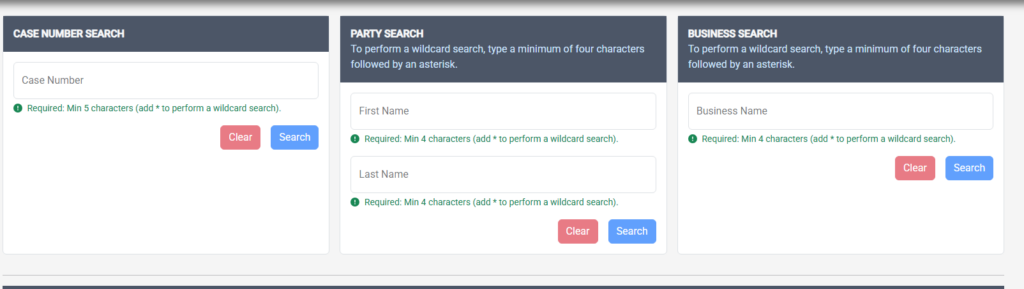
The Monterey County court records search can be completed through the official website of Monterey County Superior Court or by visiting the clerk office in person. Users need basic details like a case number, party name, or filing date to find records. Online systems may also allow filtering by case type, status, or hearing date for more precise results. In-person requests typically require filling out a records request form and may involve small copy or processing fees. Some records may have restricted access depending on confidentiality laws or case sensitivity. It is recommended to verify the information carefully and note down reference details to avoid delays during the search process.
Official Site: https://www.monterey.courts.ca.gov/
Search Method for Monterey County Court
The following steps explain how to perform a Monterey County court records search using the available tools and methods. Users can begin by accessing the official online court database or public records portal provided by the county. They may search by entering case numbers, party names, or other relevant identifiers to locate specific records.
Alternatively, records can be requested in person at the clerk’s office for assistance and access to physical files.
Open the Official Court Website
- Visit the official site of Monterey County Superior Court using Official Site: https://www.monterey.courts.ca.gov/
- Look for menu options such as Case Information, Online Services, or Public Records.
Select a Search Method
- Online case lookup system
- In-person request at the clerk office Monterey County
- Public access terminals at the courthouse
Enter Search Details in the Court Database
Input the required information into the court database search tool, such as case number, party name, or filing date. Ensure all details are entered accurately to avoid incorrect or incomplete search results. Use available filters to narrow down results and improve search precision. Review the displayed records carefully to locate the correct case or document.
- Case number (most accurate)
- Party name (first name, last name, or business name)
- Filing date or date range
Review the Search Results
The system will display matching records from the database. Results are filtered based on the search criteria entered by the user. Each record will include relevant details such as names, dates, and case information. Users can review the results and select a specific record for more detailed information.
- Case number
- Case type (civil, criminal, family, probate)
- Filing date
- Party names
- Case status
View Case Details or Request Documents
After selecting a case, the system displays detailed information including case number, parties involved, and filing date. Users can review the case status, scheduled hearings, and related court events. Additional documents, motions, and orders may also be accessible depending on public record availability. From this view, users can track updates or print/download available case details for reference.
- View available case information online
- Request certified copies if required
- Visit the clerk office for full document requests
- Pay applicable fees for official copies
Case Categories Processed by the Clerk Office
The Monterey County clerk of court processes multiple types of legal cases, including civil, criminal, family, and probate matters. Each category follows specific filing and recordkeeping procedures handled through Monterey County case processing systems. The Monterey County case processing system organizes different types of legal matters into structured categories within the clerk office Monterey County. Each category has its own filing rules, document requirements, and recordkeeping standards. The clerk’s office manages incoming filings, updates case files, and maintains accurate records across all case types. This organized approach helps ensure that every case is tracked correctly in the court database. By separating cases into categories, the court can handle workloads efficiently while maintaining consistency in documentation and public records.
Civil Disputes
Civil cases involve legal disagreements between individuals, businesses, or organizations. These cases often relate to contracts, property issues, or financial claims. They are typically filed when one party seeks compensation or enforcement of rights rather than criminal punishment. Civil courts review evidence, hear arguments from both sides, and issue judgments based on applicable laws. Remedies may include monetary damages, injunctions, or specific performance depending on the nature of the dispute.
- Accepting and processing civil filings
- Recording complaints, motions, and responses
- Maintaining case files in the court system
- Handling filing fees and document submissions
- Providing certified copies upon request
Criminal Proceedings
Criminal cases involve charges filed by the state against an individual or entity. These cases include misdemeanors and felonies. They are prosecuted by government attorneys on behalf of the public to enforce laws and maintain order. The process typically begins with an arrest or formal complaint followed by arraignment, where charges are presented in court. Evidence is then reviewed through pre-trial procedures, which may include motions, hearings, and plea negotiations. If the case proceeds to trial, a judge or jury determines guilt based on the evidence presented beyond a reasonable doubt.
- Recording charges and court filings
- Managing case schedules and court dates
- Maintaining records of hearings and outcomes
- Processing related documents such as motions or orders
- Supporting case updates in the court database
Family Law Matters
Family cases cover legal issues related to domestic relationships. These matters often involve sensitive situations requiring careful handling. They include disputes such as divorce, child custody, child support, and adoption proceedings. Courts aim to ensure fair outcomes while prioritizing the best interests of children involved. Family law cases often require confidentiality, mediation, and careful legal review to resolve conflicts effectively.
- Divorce or dissolution of marriage
- Child custody and visitation
- Child and spousal support
- Domestic relations filings
- Filing and organizing family law documents
- Maintaining confidential records where required
- Processing requests for case copies
- Updating case status in the system
Probate and Estate Cases
Probate matters deal with the distribution of a deceased person’s estate. These cases ensure that assets are managed and transferred according to a valid will or court ruling. The process may include validating the will, identifying heirs, and settling any outstanding debts or taxes. Courts supervise probate to make sure the estate is distributed fairly and in compliance with applicable laws.
- Recording wills and estate-related documents
- Managing probate filings such as petitions and inventories
- Updating estate case records
- Processing guardianship and conservatorship filings
- Providing certified copies of probate documents
Clerk’s Role Across All Case Types
Across all categories, the Monterey County Clerk of Court performs consistent functions that support Monterey County case processing. Monterey County clerk staff manage the intake, filing, and indexing of legal documents for civil, criminal, family, and probate matters. They maintain accurate court records, ensuring information is accessible to judges, attorneys, and the public when permitted by law. The office also handles scheduling support, fee collection, and record certification to keep proceedings organized and compliant with court procedures.
- Intake and verification of legal documents
- Accurate recordkeeping in the court database
- Fee collection and processing
- Public record support where permitted
- Coordination with judges and court staff
Processing Timelines
Court processing time in Monterey County varies based on case type, filing accuracy, and workload at the clerk office. Most standard filings are handled within a few business days, while complex matters may take longer. The court processing time Monterey County depends on how documents are submitted to the clerk office Monterey County and how complete those filings are. Once documents are received, staff at Monterey County Superior Court review, verify, and enter them into the court database. Simple filings usually move through the system faster, while detailed or multi-party cases may require extra checks. Monterey County case processing follows structured steps to maintain accurate records and consistent service. Users can expect variations in timing depending on document quality, case type, and current court workload.
Typical Processing Timelines
Processing durations vary depending on the type of filing and the submission method used. Some filings are processed faster when submitted electronically compared to manual methods. Complex cases or those requiring verification may take additional time to complete. Overall timelines depend on accuracy, completeness, and the specific procedures involved.
| Case Type / Service | Processing Time |
|---|---|
| Simple filings | 1–3 business days |
| Civil or family filings | 3–7 business days |
| Criminal filings | 2–5 business days |
| Probate matters | 5–10 business days |
| Certified copy requests | 2–5 business days after payment |
Factors Affecting Filing Timelines
Several factors influence how long Monterey County case processing takes within the clerk office. The type and complexity of the case can significantly affect processing time.
Workload, staffing levels, and current case volume may also cause delays. Accuracy of submitted documents and any required corrections can further extend the timeline.
- Case complexity: Multi-party or detailed filings require more review time
- Filing accuracy: Errors or missing details can delay approval
- Document completeness: Incomplete submissions may be returned for correction
- Court workload: Higher volumes can extend standard timelines
- Payment processing: Fees must be confirmed before final filing acceptance
Location and Contact information
Location and contact information are essential for accessing services and communicating with the appropriate office. The location details help visitors find the physical address, understand nearby landmarks, and plan their visit using maps or directions. Contact information typically includes phone numbers, email addresses, and sometimes online inquiry forms, allowing individuals to ask questions or request assistance. Clear and accurate details ensure smooth communication, reduce confusion, and save time for both visitors and staff. This section is especially useful for scheduling appointments, confirming office hours, or resolving case-related inquiries efficiently.
Location:
Monterey County Superior Court
Main Clerk Office Address:
240 Church Street, Salinas, CA 93901, United States
Contact:
- Official website: https://www.monterey.courts.ca.gov/
- Phone numbers and department-specific contacts are listed on the official website under the Contact/Directory section
- Email and online request options are also available through the court’s official contact page
Frequently Asked Questions
Frequently Asked Questions (FAQs) help users find quick answers about Monterey County clerk of court services without needing direct assistance. These questions usually cover common topics such as filing procedures, records access, case lookup methods, and document requests. The Monterey County clerk FAQs section supports users by explaining basic court processes in simple terms. It helps reduce confusion by addressing common concerns related to Monterey County case processing, document handling, and service availability. By reviewing FAQs, users can better prepare their documents, understand court procedures, and use clerk office Monterey County services more efficiently.
How are legal documents submitted to the clerk office?
Legal documents can be submitted to the Monterey County clerk of court through multiple methods. Filers may submit paperwork in person at the courthouse, by mail, or through approved electronic filing systems where available. In-person submissions are reviewed at the counter, where staff check documents for completeness and required formatting. Mail submissions must include correct forms, fees, and return details. Electronic filings are processed through the official court system and entered into the court database after verification. Each submission goes through a review process to confirm accuracy before being accepted into Monterey County case processing records.
What details are needed to search court records?
To perform a Monterey County court records search, users must provide key identifying information. The most accurate identifier is a case number, which directly links to a specific record. If the case number is not available, a party name can be used, such as an individual or business involved in the case. Filing date or approximate date range may also help narrow results in the case lookup system. Providing multiple details improves search accuracy and reduces irrelevant results. These inputs are used within the clerk office Monterey County database to locate matching civil, criminal, family, or probate records.
Are all court records publicly accessible?
Not all court records are available for public viewing. The Monterey County clerk of court follows legal rules that limit access to certain types of information. Public records typically include civil, criminal, family, and probate case summaries. However, some records remain restricted due to privacy laws or court orders. Examples include sealed cases, juvenile records, and documents containing sensitive personal information. Public access records can usually be viewed through online systems or in person, while restricted records may require special authorization or legal permission. These limitations help balance transparency with privacy protection.
How long does it take to process filings?
Processing time in Monterey County depends on the type of filing and the accuracy of submitted documents. Simple filings may be processed within a few business days, while more complex cases can take longer due to additional review. Factors such as incomplete forms, missing fees, or high workload can affect processing timelines. The clerk office Monterey County reviews each document before entering it into the system, which helps maintain accurate court records. Users may experience slight variations in timing depending on case type, filing method, and current court volume.
Can documents be requested without visiting the office?
Yes, many documents can be requested without visiting the clerk office in person. Users can submit requests through online systems, mail, or official court contact channels provided by Monterey County Superior Court. Certified copies and certain records may require payment and verification before release. Some requests can be fulfilled electronically, while others may be mailed to the requester. Availability depends on the type of document and any restrictions that apply. Online request options make it easier to obtain court records without physically visiting the courthouse, especially for standard record requests and general case information.